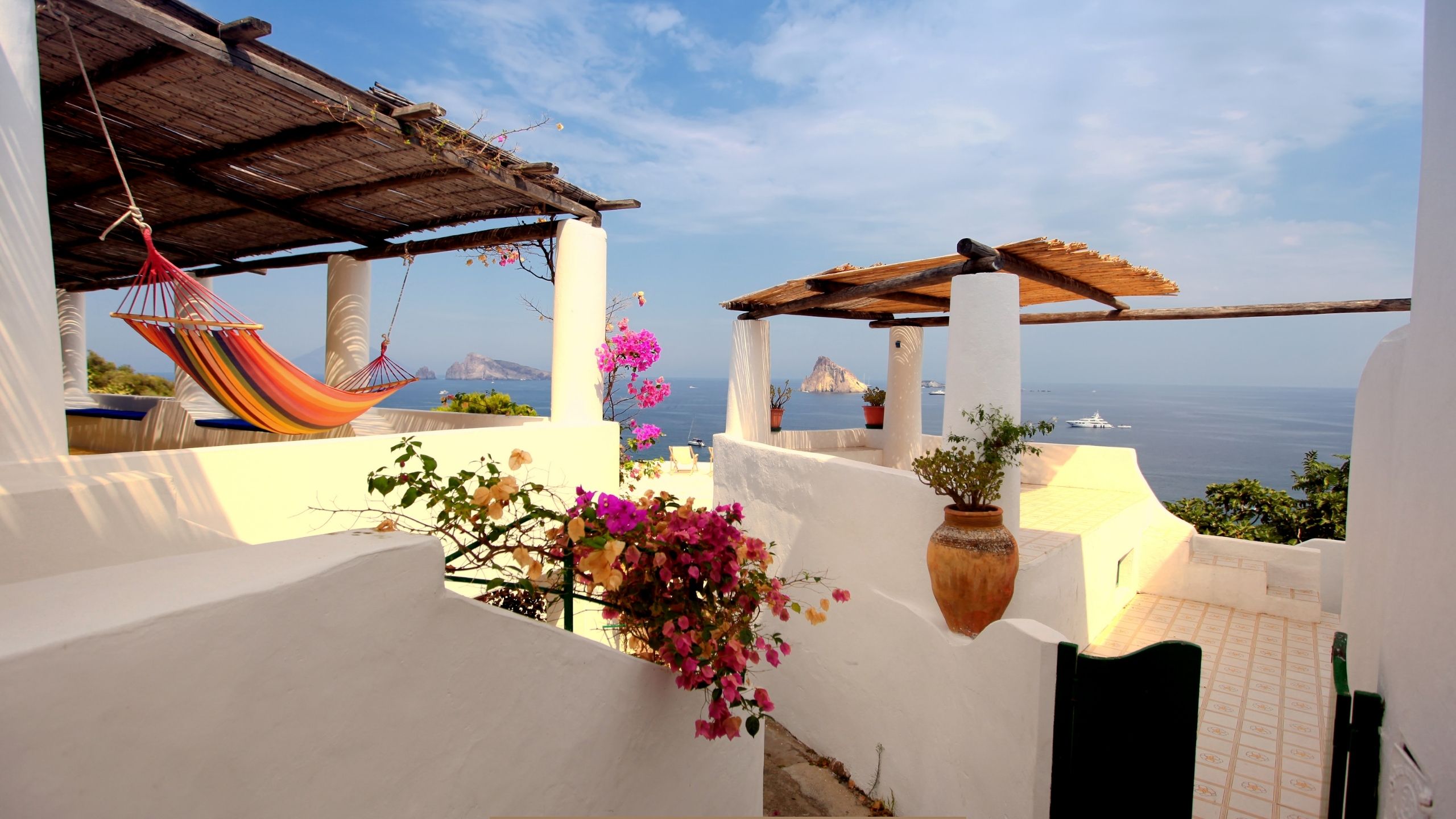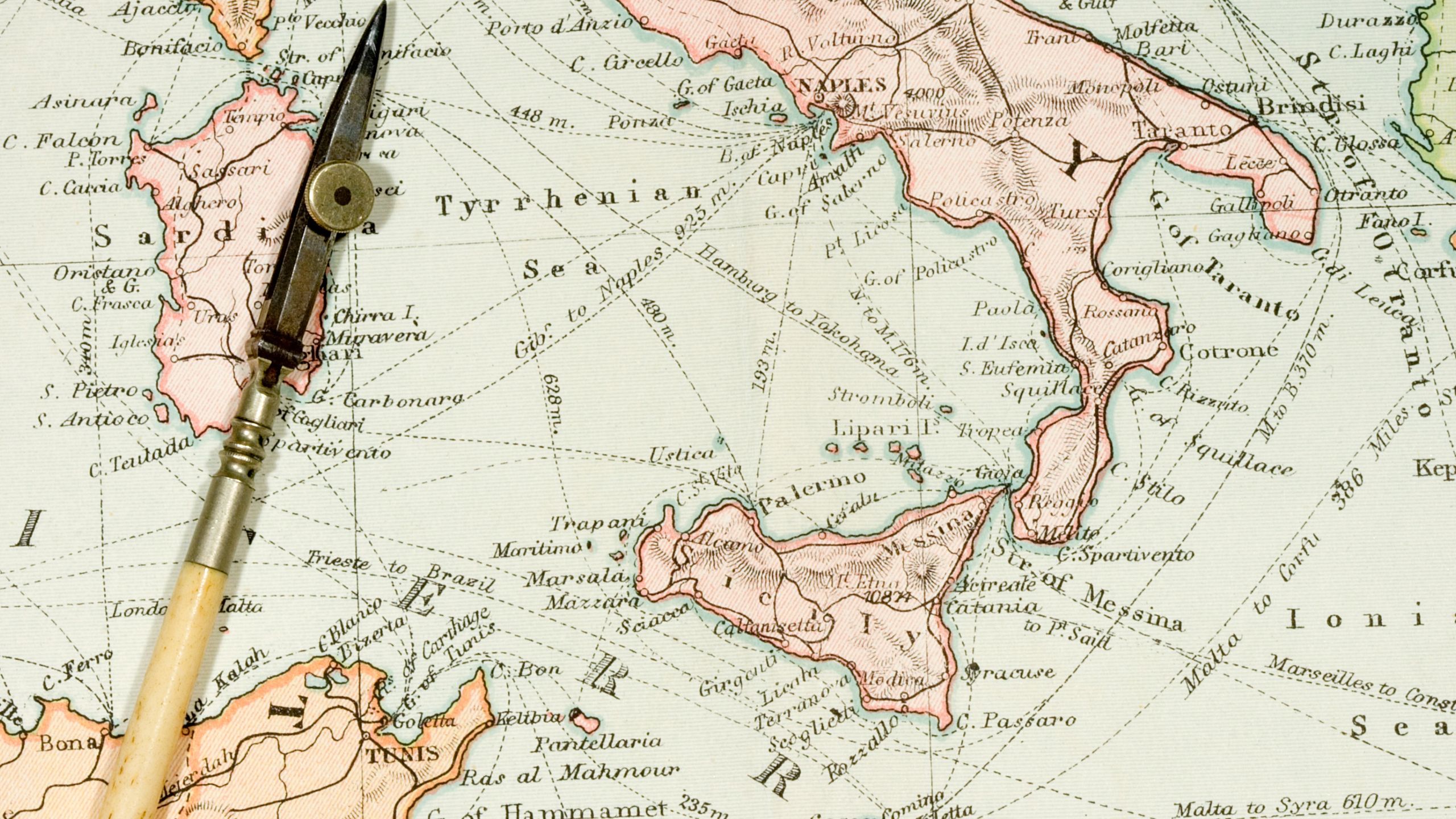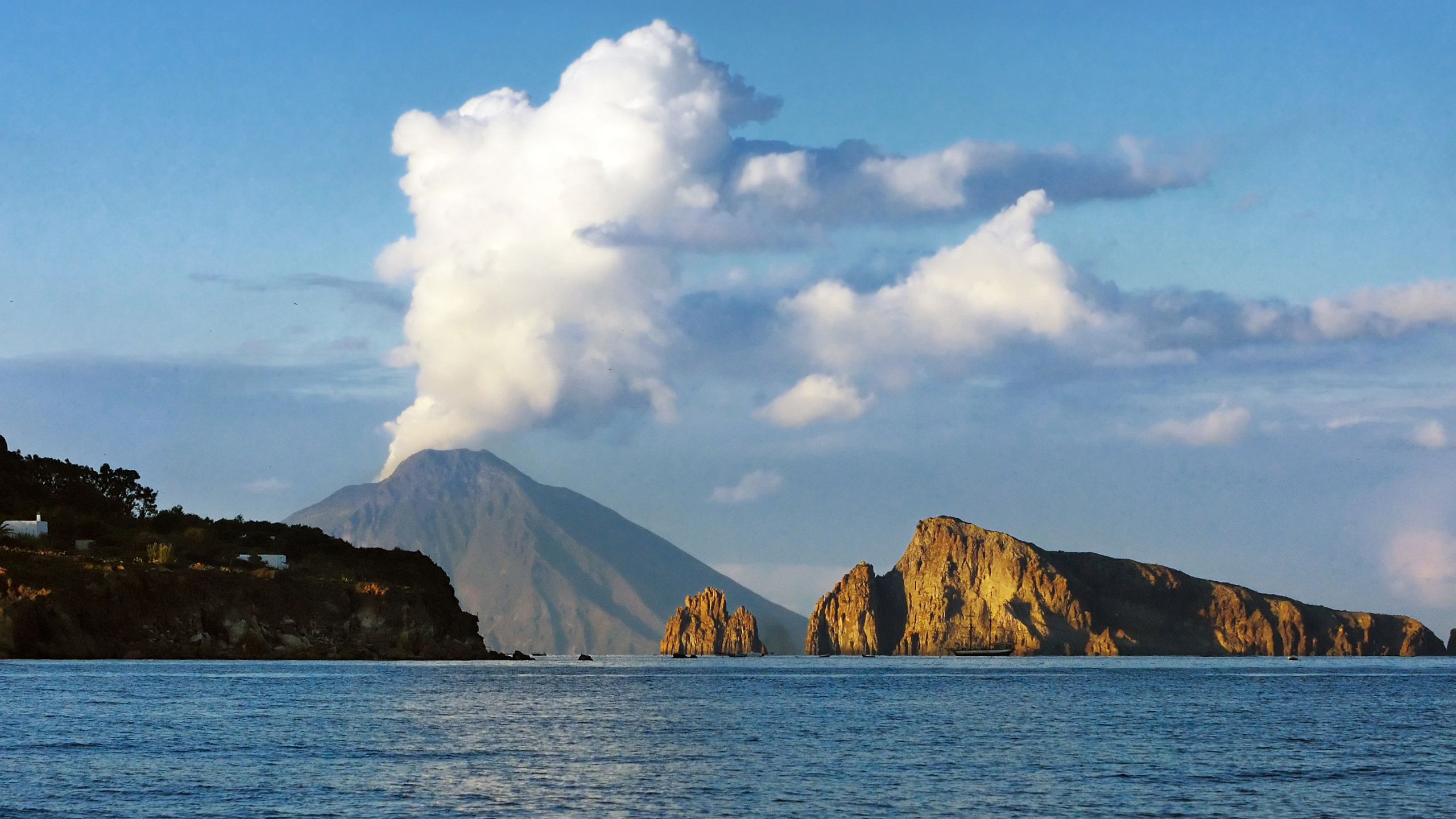
Imagine this: you dip your feet into blue-green water splashing against tall volcanic cliffs, thin smoke curls from Stromboli’s always-active peak, and pretty villages painted in many colors welcome you with the smell of freshly baked bread. Welcome to the Eolie Islands, a group of volcanic islands off the northern coast of Sicily, where each island has its own special character and fiery charm.
But before we set sail, let’s get acquainted with this captivating cluster of seven main islands: Lipari, Vulcano, Salina, Alicudi, Filicudi, Panarea, and Stromboli. Each with its own distinct vibe, these islands are like siblings with diverse personalities waiting to be discovered.
Lipari
Lipari is like the lively big sister among the Eolie Islands, ready to embrace you with its vibrant streets full of energy. When you step onto its shores, you’re surrounded by a mix of sights and sounds – colorful shops, tasty restaurants, and echoes of history in its old landmarks.
The heart of Lipari beats strongest at its busy harbor, where fishing boats and fancy yachts share the waters, and the salty air whispers tales of adventure. Take a leisurely walk along the waterfront, where the sounds of the sea blend with the happy voices of locals and tourists. Make sure to stop and enjoy the delicacies at the place that will catch your attention.
If you’re curious about the island’s past, the Lipari Museum is a must-visit. It’s like a treasure chest full of ancient wonders, showcasing the stories of people who lived here thousands of years ago. You’ll see artifacts that tell tales of trade, myths, and the strong will of Lipari’s inhabitants.
And don’t forget to visit the majestic Castle of Lipari! It sits proudly on a cliff, offering breathtaking views of the sea. Climb its old stone steps, imagining the footsteps of those who walked here before, and enjoy the panoramic scenery all around.
But one of Lipari’s coolest secrets lies underground – the Porticello Quarry. It’s like a maze of caves and tunnels carved into the volcanic rock. Explore this hidden world where echoes of ancient workers still linger, and marvel at their cleverness in shaping the land with only their hands.
Vulcano
The island of Vulcano, initially named Therasia and later Hiera in ancient Greek lore, acquired its current name from the fire deity Vulcan, who was believed to have his forge there according to Greek and Roman mythologies. References to this association can be found in Virgil’s Aeneid and earlier accounts by Aristotle and Thucydides. Historically, Vulcano served as a site for purifying the dead, with bodies brought there for rituals before burial.
In 1083, it was donated to Benedictine monks, but in 1813, sulfur processing became a prominent industry, drawing the attention of figures like James Croesus Stevenson. However, a volcanic eruption in 1888 caused widespread damage, leading to a shift towards agriculture. By the 1950s, Vulcano had emerged as a popular tourist destination, renowned for its thermal waters and mud baths, a status it still holds today.
Our Favorite Activities
Trekking to Vulcano’s Crater: Adventurers flock to conquer Vulcano’s towering volcano, captivated by the promise of unparalleled vistas across the archipelago. The challenging hike is rewarded with awe-inspiring panoramas, making each step a triumph.
Gran Cratere della Fossa: At the heart of Vulcano lies its crowning jewel, the Gran Cratere della Fossa. With a vast crater stretching over 500 meters in diameter, it’s surrounded by fumaroles and vibrant sulfur rocks, offering unmatched views of Lipari, Salina, Stromboli, Panarea, and Filicudi.
Capo Grillo Viewpoint: For panoramic views without the climb, head to Capo Grillo Viewpoint accessible by car or scooter. Capture the beauty of the archipelago with breathtaking vistas of Lipari, Salina, Panarea, Stromboli, and Filicudi.
Vulcanello Peninsula: Along the island’s northern coast lies the scenic Vulcanello Peninsula, home to natural wonders like Punta dello Scoglietto and Punta del Roveto. Explore the famed Valle dei Mostri, where rock formations mimic mythical creatures.
Punta dell’Asino Beach: Journey south to discover Punta dell’Asino Beach, a tropical haven with black volcanic sands and crystalline waters, perfect for a tranquil escape amidst lush surroundings.
Natural Thermal Springs: Surrender to relaxation in Vulcano’s natural thermal springs. Whether soaking in the warm waters of Baia delle Acque Calde or indulging in rejuvenating mud baths at the Thermal Pool, a revitalizing experience awaits.
Levante Port: Begin your island exploration from Levante Port, a charming hub boasting local eateries, shops, and accommodations. Take in the picturesque views of the volcano cascading towards the coast at your leisure.
Gelso Beach: Experience another slice of paradise at Gelso Beach, with its clear, crystalline sea and volcanic sands. Don’t miss the nearby Capo Gelso Lighthouse for stunning vistas.
Antica Via Reale (Old Royal Road): Trace Vulcano’s ancient paths along the Antica Via Reale, a historic mule track offering a scenic journey from the port to the quaint village of Gelso, particularly enchanting in springtime.
Salina
Salina, the green-thumbed island, is a true gem within the Aeolian archipelago. Its lush green landscapes and breathtaking vistas make it a haven for nature enthusiasts and sea lovers alike. If you’re looking for a getaway that combines natural beauty with relaxation, Salina is the perfect destination.
One of the best ways to experience Salina is by taking leisurely hikes through its picturesque vineyards, which blanket the island’s hills. Along the way, you can indulge in the unique flavors of locally grown capers, thriving in the nutrient-rich volcanic soil. And don’t forget to explore the island’s charming villages, each exuding its own distinct atmosphere and charm.
But perhaps the highlight of any visit to Salina is the opportunity to taste its world-renowned Malvasia wine. Crafted using ancient techniques passed down through generations, this exquisite wine is a proof to the island’s rich winemaking tradition. It’s a true delight for the palate and a must-try for any visitor.
Alicudi and Filicudi
Alicudi and Filicudi, the introverted twins of the Aeolian archipelago, offer a serene retreat for those yearning for solitude amidst untouched natural beauty. These hidden gems beckon travelers to immerse themselves in the tranquility of their car-free landscapes, where the passage of time slows to match the leisurely pace of island life.
Filicudi is a small paradise covering only nine square kilometers. Its landscape was shaped by ancient volcanoes, and it’s covered in beautiful Mediterranean plants like capers, fennel, mint, and oregano. There are three small villages along the coast where you can find some restaurants. But the best way to explore Filicudi is by renting a boat or a scooter to reach the hidden beaches and clear waters. For stunning views of the other islands, you should hike up Fossa delle Felci, the highest point on Filicudi. It’s a good idea to go with a guide who knows the area well.
Alicudi, Filicudi’s neighbor, is even smaller and more remote. About half of the island is uninhabited, and you can only get around on foot or by donkey. When you arrive at the port, you’ll see a charming scene of pebble beaches and colorful fishing boats, giving you a taste of the island’s traditional way of life. From there, you can follow the trails that wind up to the top of the island’s 675-meter-high volcano. Along the way, you’ll be surrounded by heather-covered slopes and breathtaking views, with nothing but the sounds of nature to keep you company.
Panarea
Panarea is known as the life of the party among the Aeolian Islands, drawing people from all over with its lively nightlife. It’s a place where the excitement is contagious, where stylish shops line the streets, and where the smell of yummy seafood drifts from restaurants by the sea. When the sun goes down, Panarea really comes to life, with bars and clubs inviting everyone to dance under the starry sky. Whether you’re enjoying the fancy atmosphere or meeting new friends attracted to the island’s fun vibe, Panarea guarantees an unforgettable time.
Even though it’s the smallest of the seven inhabited Aeolian Islands, Panarea has a charm all its own. With only about 3.4 square kilometers of land, this volcanic island is perfect for both relaxing and exploring. You can admire breathtaking views from Punta del Corvo or take a dip in the thermal springs near Punta di Peppe e Maria. And if you’re feeling adventurous, scuba diving lets you discover hidden treasures like a sunken ship between Lisca Bianca and Bottaro rocks.
But what really makes Panarea special are the little islands and rocky spots surrounding it. Places like Basiluzzo, Spinazzola, and Dattilo offer a peek into a world frozen in time, and you can only reach them by boat. These spots, full of history and mystery, add to Panarea’s appeal, making it unlike anywhere else in the Mediterranean.
Looking back at Panarea’s history, you’ll find a mix of cultures that have shaped its story. From its old name, “Euonymos,” to the Romans who once lived here, the island’s past is as diverse as its landscape. Despite facing challenges from pirates and raiders long ago, Panarea has managed to stay strong, now attracting fancy vacationers and celebrities.
Back in 2011, W magazine called Panarea the trendiest place to be in the Mediterranean during the summer, making it a hotspot for the cool crowd. And since it became a UNESCO World Heritage Site in 2000, Panarea has been careful to protect its natural beauty. Most homes here are only used temporarily, and getting a permanent place is tough. But for those lucky enough to live here year-round, it’s a paradise of peace and beauty, where echoes of history can be heard among the rocky hills.
Panarea isn’t just an island—it’s a place where the past mixes with the present, where you can explore nature and enjoy city life all at once.
And then there’s Stromboli
Imagine you’re standing on Stromboli, an island that’s like the fiery heart of all the nearby islands. It’s not just any old island—it’s actually a volcano, with an area of about 12.6 square kilometers. That’s pretty big, considering the island represents the upper third of the whole volcano! And despite its relatively small size, it’s home to around 500 people as of 2016.
Now, this volcano isn’t like the ones you see in movies that only erupt once in a blue moon. No, Stromboli is constantly active, like it’s always saying hello to the world. You can see it from all over the island and even from the sea, earning it the nickname “Lighthouse of the Mediterranean.” The name Stromboli itself comes from the Ancient Greek word “Strongýlē,” which means “round,” because, you guessed it, the volcano looks round and cone-shaped from afar.
Picture this: Stromboli stands tall at 926 meters above sea level, and it’s even taller underwater, reaching over 2,700 meters above the sea floor. That’s pretty impressive, right? And get this, there are three active craters at the top right now, but who knows, with all its geological activity, that could change in the future.
One of the coolest things about Stromboli is the “Sciara del Fuoco,” which is like a big horseshoe-shaped depression on the northwest side of the volcano. It was made over thousands of years by the volcano’s collapses. And if you go about 2 kilometers northeast, you’ll find Strombolicchio, a reminder of the original volcano.
Now, let’s talk eruptions. Stromboli has been putting on a show for thousands of years, almost non-stop! Sure, there was a serious eruption in 1921, but mostly, it’s these bursts of energy we call Strombolian eruptions. That means explosions happen at the summit craters, shooting out lava fragments, ash, and volcanic bombs into the air. It’s like fireworks, but with rocks!
But don’t worry, most of the time, these eruptions are pretty mild, just a few bursts here and there. Sometimes, though, it gets a bit more intense, like in 2019 when there were major explosions that sadly caused some harm. So, it’s always good to stay safe and follow any warnings.
Despite all this volcanic action, Stromboli is still home to a few villages, like San Bartolo, San Vincenzo, and Ginostra. Back in the early 1900s, thousands of people lived here, but over time, many have left, and now only a few hundred call Stromboli home. They mainly speak Aeolian, a dialect similar to Sicilian.
Buon Viaggio!